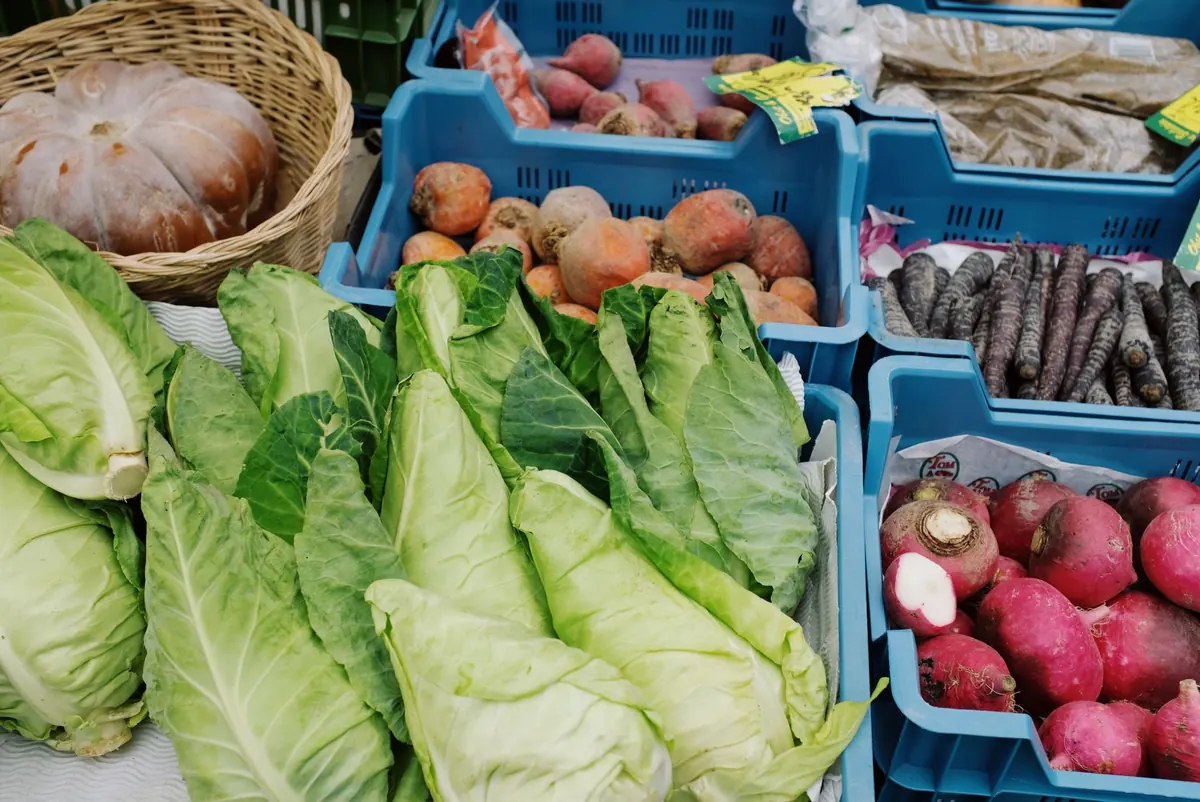
A market season rarely fails because sales were bad. It fails because the money arrived in the wrong order. Spring asks for seed, soil, permits, and booth fees months before a single tomato is sold. Summer pays loudly and tempts you to spend. Fall settles the bill and determines what you can plant next year. Treat the calendar as three different businesses with three different budgets, and the market that felt precarious in May can start to feel predictable by September.
Start by counting selling days, not months. A market that runs from April to November might give you thirty-five Saturdays and forty weekday slots, and each of those days carries a fee, a tank of fuel, a set of labelled containers, and your own hours. Pull the vendor contract and write down every date, the fee attached to it, any jury or membership charge, and the insurance certificate the market requires.
Then subtract the days you probably won't sell: the early-spring dates when nothing is ready, the late-fall dates when the fields are done, the days a storm shuts the square down. A season with twenty listed dates might realistically be sixteen paying days. Budget on sixteen. If the other four work out, that's a bonus, not a plan.
Spring is an investment period disguised as a market season. You are spending on the year's harvest while selling whatever overwintered. Greens, radishes, herbs, transplants, and stored roots move, but in small baskets at low volume. The money going out is steady and real.
You cannot eliminate spring costs, but you can move some cash forward. Sell transplants before the market opens. Offer a farm share or a standing order list to your regulars in March, taking payment up front for a weekly box. Take deposits on bulk orders of spring lamb, early honey, or a preserved-goods basket. Anything that puts cash in your hand before the first frost date does two jobs: it funds spring and it tells you what customers actually want in June.
Summer is where discipline matters most, because the till is full and the temptation is to reinvest immediately in every good idea. You need extra help, more ice, more packaging, a second cooler, and a spare tent leg after the wind takes one. Those are legitimate costs. The problem is that they arrive in the same weeks as your best revenue, so it feels like the season can absorb anything.
Set a standing transfer on every market day. The moment you get home and count the cash, move a fixed share of gross into a separate account before you pay a single bill. That account covers three things only: fall inputs, taxes you will owe, and the reserve that funds next spring. A simple split like half to operations, a quarter to reserves, and a quarter to tax and next-season costs works for many vendors, but pick your own percentages and follow them every week. Consistency matters more than the exact numbers.
Fall sales are quieter than summer but often the most profitable per hour, because storage crops, preserves, and value-added goods carry less spoilage risk and no harvest-day scramble. This is also when next year's expenses come due: garlic seed, cover crop seed, soil amendments, equipment repairs, and winter feed if you keep livestock.
Fall is the season to be honest. Compare what you projected in April with what actually landed. Which market days paid for themselves? Which product paid the booth fee? Did the Wednesday slot ever justify the fuel and the lost field time? Write the answers down while the details are fresh. You will forget by January.
Keep your change fund, operating money, reserve, and tax set-aside in separate places, even if that means four sub-accounts at one credit union. It is much harder to borrow from a reserve you have to consciously transfer out of.
Pay yourself a set draw rather than taking cash as needed. A vendor who pulls $60 from the till on a slow Tuesday and $200 on a good Saturday has no idea what the business earns. A vendor who takes the same weekly draw does.
Do not let one crop carry the whole plan. If a single product is more than half your market revenue, a bad germination rate, a hailstorm, or a competitor's price change takes your season with it.
Aim to enter each spring with enough reserve to cover that spring's committed costs: fees, seed, soil, and permits. If the reserve covers those, you start the year from a position of patience instead of panic, and patience is what lets you hold your price instead of dumping product at noon.
Keep clean records of sales, fees, and expenses, and sort out sales tax and income tax treatment with an accountant who works with small farms and market vendors. Rules vary by state and province, and a short conversation in the off-season is cheaper than untangling a year of mismatched receipts in April.
The right time to rebuild this plan is a grey afternoon in January with the seed catalogs open, not a frantic Thursday night before the first market. Set aside two hours. Ask three questions: what did spring actually cost last year, which market days earned their fees, and what did my best-selling weeks have in common?
Then set your numbers for the coming year: a reserve target, a weekly draw, a transfer percentage for every market day, and a deadline list for every application and permit. Post it where you pack the truck. When July arrives and the table is full and the cash box is heavy, that sheet is what keeps the money in the right season.
Photo: ready made / Pexels

A practical guide to building an emergency fund when rural income arrives in bursts: setting a realistic target,...
Farmland REITs, private agriculture funds and crowdfunded farm projects let you own a slice of working land without...

A practical checklist for budgeting fuel, tires, insurance, and repairs when long rural drives and rough roads push...

Personal finance rooted in the countryside.
